The comparison of Brahman with the noumenal is one that is quite easy to make, and one that I have made numerous times in the past. Brahman is like the Ding-an-sich, but non-formal. It is not a precondition for our understanding, but rather an object of experience (as a model?). Brahman can be found, seen, and experienced as the non-phenomenal. A kind of experience of non-experience that is only such because of the initial sundering. It is a concretized process, one of initial unity followed by separation and then the inevitable reconciliation. But this answering in regards to the process still does not adequately answer Hegel's critique of Schelling's Absolute (which applies to Kant's Ding-an-sich of course, being a more formal version of Schelling).
Schelling's Absolute, "the night in which all cows are black" (says Hegel), was one in which opposition could not be found. It was the naive unity which could not help but differentiate itself and thus undermine itself. This differentiation of the concept is shown to be necessary by Hegel (as in the Greater Logic). However, what if Brahman was not a concept such as Schelling's Absolute, not a non-differentiated and thus empty idea, but a concrete unity, that is, a concept in which both separation (Trennung) and identity are to be found? The explicit working-out of the concept of Brahman ought to be different from the Hegelian Logic due to the non-practical nature of that Logic (while formally the Absolute Idea is not transcendent, I have a certain suspicion that unless one integrates experience and conceptuality explicitly and practically, and not just a formal equation of the two, then one cannot really have overcome the difference; this is where Hindu philosophy comes in handy).
Hegel remarks that "indeterminateness and emptiness of representation" is "altogether the same as what an Indian calls Brahma, when for years on end, looking only at the tip of his nose, externally motionless and equally unmoved in sensation, representation, phantasy, desire, and so on, he inwardly says only Om, Om, Om, or else nothing at all. This dull, empty consciousness, taken as consciousness, is just this - being" (Hegel, The Science of Logic, Cambridge 2010 edition, p. 73).
Perhaps it is supererogatory to state that Hegel (and pretty much all Europeans of the day) has no idea what he is talking about. I aim to find exactly why this is true, philosophically at that.
Showing posts with label advaita vedanta. Show all posts
Showing posts with label advaita vedanta. Show all posts
Sunday, September 8, 2013

Saturday, August 3, 2013
What Is Antagonistic About the Entirety?
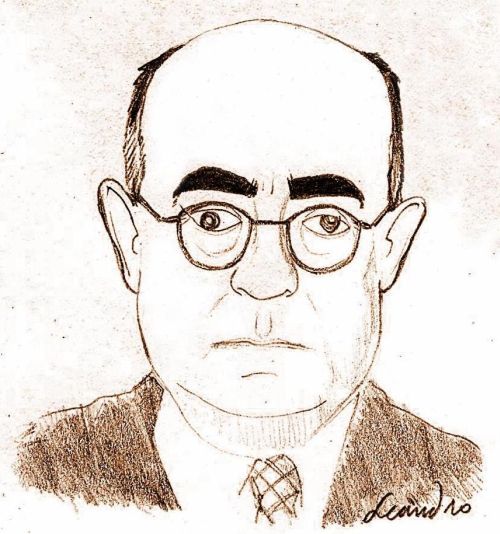
Q: What is antagonistic about the entirety? At that level, aren't all distinctions (and therefore antagonisms) unmade?
A: The entirety (Totality/Brahman) is antagonistic in the sense that it produces change. Sure, in itself the whole is eternal in some sense, but from it has been produced the subject and all the myriad systems and distinctions we see around us. Avoiding the problem of the finite emerging from the infinite (classically, there has been a problem with the self-limiting of the unlimited, or the emergence of evil from within the unchanging fundamental goodness) requires a conception of Brahman/Totality/the Unmanifest that is not really unmanifest. Well, it is, but it is at the same time always manifest, immanent within the manifest. Adi Shankara was on to this insight quite a while ago, and much later Spinoza seems to have figured it out. Substance/Brahman/whatever is not external to the universe, but is that very universe from a different perspective (or the primordial "no perspective", which is, still, a perspective).
The entirety is antagonistic in two senses: first, the phenomenal entierty (which is what I initially had in mind when I borrowed the blog title from Theodor Adorno) is quite antagonistic, as I briefly outlines previously; second, the Absolute in itself is antagonisitc in its real emanations. However, at the same time, the Absolute is also in a different sense changeless.
This contradiction should be analyzed more carefully. At first pass, there is a double meaning to the mantra "sarvam khalvidam brahma"--"all this is Brahman". First, everything's real essence, its unchanging base, is Brahman. Second, everything is Brahman--manifestation is an activity of Brahman, and only therein can Maya be based. Brahman is immanent, not separate from the universe. Brahman would exist without our perception of it, and though names and forms are socially-constructed, the immanent nature of Brahman would remain unchanged. The stuff of which names and forms are fashikoned would exist, and in this sense I remain as materialist as ever.
The universe is always changing, and therefore is always antagonistic. Brahman, which is... I don't want to say coterminous with the universe, but it sort of is, is thus antagonistic. The different levels of in-itself and for-itself and what-have-you are begging to be re-evaluated in light of all this immanentism. So maybe I'll do that.
P.S. I reserve the right to completely disown this entire post as the product of my over-caffeinated and sleep-deprived mind. Have mercy.
Picture: http://commons.wikimedia.org/wiki/File:ADORNO_by_LGdL.JPG
Tuesday, July 30, 2013
Various Undeveloped Thoughts on Various Undeveloped Topics
1. Non-difference, as an ontological category, is based in the idea of difference itself, found between people, discovered through various means such as believing in other minds.
2. Brahman is more "real" than Maya when the former is conceived of as a model. The scale of "reality" of phenomena/experiences only works when the mystical mindset is already in some sense accepted, when one has some portion of "faith", however rational or not.
3. The subject is just an object that disagrees with that designation.
4. Brahman relates to the thing-in-itself in a manner that is precisely analogous to that between Truth and correctness as a formality.
5. Drone music is supremely creative in its very un-creativity. It simply does on the level of the audience what typical music does almost solely on the level of the composer.
6. Conceived of broadly enough, everything is good. Unfortunately, conceived of broadly enough, everything is also bad. Conceived of most broadly, it is neither.
7. The "current of history" or other such formulations are always introduced theoretically after the fact. History is relentlessly objective. This means that the subject ought to become objective to change anything.
8. Objectivity is not just the sum total of subjective conceptions. It is that plus the overcoming of reification/alienation.
9. There can only be an internal world because there is an external one. That both exist is attested to by the ubiquitous conception of duality itself.
10. A little masochism is necessary to prove that one is a living, thinking being.
2. Brahman is more "real" than Maya when the former is conceived of as a model. The scale of "reality" of phenomena/experiences only works when the mystical mindset is already in some sense accepted, when one has some portion of "faith", however rational or not.
3. The subject is just an object that disagrees with that designation.
4. Brahman relates to the thing-in-itself in a manner that is precisely analogous to that between Truth and correctness as a formality.
5. Drone music is supremely creative in its very un-creativity. It simply does on the level of the audience what typical music does almost solely on the level of the composer.
6. Conceived of broadly enough, everything is good. Unfortunately, conceived of broadly enough, everything is also bad. Conceived of most broadly, it is neither.
7. The "current of history" or other such formulations are always introduced theoretically after the fact. History is relentlessly objective. This means that the subject ought to become objective to change anything.
8. Objectivity is not just the sum total of subjective conceptions. It is that plus the overcoming of reification/alienation.
9. There can only be an internal world because there is an external one. That both exist is attested to by the ubiquitous conception of duality itself.
10. A little masochism is necessary to prove that one is a living, thinking being.
Saturday, July 27, 2013
Thoughts into Words
It's very hard to put thoughts satisfactorily into words unless there is an external force to push up against. This is why it is so important to have good intellectual friends. Typically, one has very little ability to self-judge one's ideas. Not to say that the experience of that idea beyond the veil of language (a very real veil to be sure) is unable to to assessed, but it is true that those subjective experiences typically are quite formless, and must go through a miniaturized process of pseudo-manifestation (not to be confused with the manifestation or formlessness of the absolute).
So, one must have an opposition of some sort or another, against which one's thoughts and modes of subjectivity may take form. The form taken depends on a wide variety of objective factors (and even, indeed, one's subjective semi-formless experience is, as a piece of the whole, determined by these as well). And then again the particular form taken reacts back upon the subjective inner sanctum, in good dialectical fashion, and so on goes the evolution of thought. In fact, the places to which we are led by phenomenal thought are often of quite a different nature than was our initial intuitive understanding. One thing that is often forgotten, especially in spiritual circles, is that the intuition itself develops in dialectical interaction with other, non-intuitive forms of knowledge. The influences of society, of the phenomenal universe, are paramount in shaping how we view both the phenomenal and the non-phenomenal.
The question arises: What is the relation between the socially-determined world of phenomenality/society and the so-called eternal Absolute, non-phenomenality, the Unmanifest? The complete indeterminate quality (or better yet, non-quality), the non-duality of Brahman, leads one to conclude (although prematurely) that Brahman is un-social, eternal in the old-timey metaphysical sense of the word. This, however, is not the case, because of the social construction of the phenomenal reality against which that non-duality is opposed. Of course, this is only part of the solution, namely that from the point of view of Maya, phenomenality. What about from the viewpoint of the Absolute? Is that, then, social or unsocial in its self-understanding? The answer, of course, is that it is neither, because it is beyond distinctions like this, from its own perspective only, however. One would do well to keep in mind that to progress to the non-dual in any sense of the term, and to speak of it of course, we must bow to the inescapable logic of the plane in which we live and work and philosophize.
So, one must have an opposition of some sort or another, against which one's thoughts and modes of subjectivity may take form. The form taken depends on a wide variety of objective factors (and even, indeed, one's subjective semi-formless experience is, as a piece of the whole, determined by these as well). And then again the particular form taken reacts back upon the subjective inner sanctum, in good dialectical fashion, and so on goes the evolution of thought. In fact, the places to which we are led by phenomenal thought are often of quite a different nature than was our initial intuitive understanding. One thing that is often forgotten, especially in spiritual circles, is that the intuition itself develops in dialectical interaction with other, non-intuitive forms of knowledge. The influences of society, of the phenomenal universe, are paramount in shaping how we view both the phenomenal and the non-phenomenal.
The question arises: What is the relation between the socially-determined world of phenomenality/society and the so-called eternal Absolute, non-phenomenality, the Unmanifest? The complete indeterminate quality (or better yet, non-quality), the non-duality of Brahman, leads one to conclude (although prematurely) that Brahman is un-social, eternal in the old-timey metaphysical sense of the word. This, however, is not the case, because of the social construction of the phenomenal reality against which that non-duality is opposed. Of course, this is only part of the solution, namely that from the point of view of Maya, phenomenality. What about from the viewpoint of the Absolute? Is that, then, social or unsocial in its self-understanding? The answer, of course, is that it is neither, because it is beyond distinctions like this, from its own perspective only, however. One would do well to keep in mind that to progress to the non-dual in any sense of the term, and to speak of it of course, we must bow to the inescapable logic of the plane in which we live and work and philosophize.
Tuesday, July 23, 2013
Non-Dual Non-Experience?
Continuing my previous project of advaitic dialectics, I have several new thoughts which came to me during a discussion with a friend.
The Totality is experienced as a model, and as a model only. When asked the meaning of a poem, one cannot quote the entire poem back to the asker, though this would be the most direct and truthful answer in some sense. Rather, one must provide something which points to the wholeness of the poem without exactly repeating it. One must, in other words, give a model of the poem. Similarly, the Totality cannot be directly experienced or talked about as Totality, because of the previously-mentioned impossibility of squaring the particularity of one's consciousness with the universality of everything. The individuality cannot make the leap to Totality as Totality, but only may commune with it in microcosm, in model.
This brings me to the point that non-dual experience is quite different from non-dual non-experience. A subjectivity experiencing non-duality is going to be quite different from the simple non-duality that lies "outside" subjective/socially-determined forms and names. The singularity/particularity of one's subjective experience is a component of the mystical experience that is quite clearly not present when there is no sufficiently advanced consciousness to have that experience. Owing no small debt to Marx and to Marxian philosophy, I do not believe that the nature of non-duality is in-itself consciousness, but rather that social conditions yada yada yada...
The Totality is experienced as a model, and as a model only. When asked the meaning of a poem, one cannot quote the entire poem back to the asker, though this would be the most direct and truthful answer in some sense. Rather, one must provide something which points to the wholeness of the poem without exactly repeating it. One must, in other words, give a model of the poem. Similarly, the Totality cannot be directly experienced or talked about as Totality, because of the previously-mentioned impossibility of squaring the particularity of one's consciousness with the universality of everything. The individuality cannot make the leap to Totality as Totality, but only may commune with it in microcosm, in model.
This brings me to the point that non-dual experience is quite different from non-dual non-experience. A subjectivity experiencing non-duality is going to be quite different from the simple non-duality that lies "outside" subjective/socially-determined forms and names. The singularity/particularity of one's subjective experience is a component of the mystical experience that is quite clearly not present when there is no sufficiently advanced consciousness to have that experience. Owing no small debt to Marx and to Marxian philosophy, I do not believe that the nature of non-duality is in-itself consciousness, but rather that social conditions yada yada yada...
Thursday, July 18, 2013
Clarification of the Brahman-Totality Relation
Thanks to a good friend and brilliant thinker, I have been pushed to develop a number of concepts or relations that I had previously been pursuing. The first of which, the Totality, I will deal with here.
Objection: Given that Brahman is typically understood as a uniform non-dual experience, how can it be said to be the Totality? The Totality is duality in non-duality or vice versa, so the experience of Totality would need to be experience of distinction in non-distinction, in other words it would need to be experience of the previously-defined Brahman PLUS something extra.
Answer: Non-duality in some sense occurs when one is dead. I believe that state to be different than the awareness of non-duality that is sought in intense meditation. The difference implies that awareness/consciousness, being still subject, is merged with the object, which in this case is thought to be not AN object but THE object, the undifferentiated whole. Experiencing this whole implies a merging of the non-differentiated subject with that object. This is non-differentiated, but it is yet differentiated because the subject and object exist still within the state, though sublated. Therefore, the experience of Brahman is the experience of the Totality (as idea?), even though we typically relate it as being non-differentiated wholeness.
Objection: But what about understanding and knowing everything in the universe? Isn't that the totality?
Answer: That is either impossible (I think it is) or irrelevant. The Totality as perfect merging of subject and object in a single non-dual experience which yet has differentiation is, it is true, not a totality of names and forms. So, it does have all things within it, but in a logical/mystical way, and not as an explicit amalgamation of information. That, too is a Totality, but then again why should there be just one? It is like Hegel's philosophy, in which the idea of difference in non-difference (I can't remember which category, but I think it's the Notion?) is deduced as a separate entity from the really-existing "Totality", as it's called in that context.
Objection: Given that Brahman is typically understood as a uniform non-dual experience, how can it be said to be the Totality? The Totality is duality in non-duality or vice versa, so the experience of Totality would need to be experience of distinction in non-distinction, in other words it would need to be experience of the previously-defined Brahman PLUS something extra.
Answer: Non-duality in some sense occurs when one is dead. I believe that state to be different than the awareness of non-duality that is sought in intense meditation. The difference implies that awareness/consciousness, being still subject, is merged with the object, which in this case is thought to be not AN object but THE object, the undifferentiated whole. Experiencing this whole implies a merging of the non-differentiated subject with that object. This is non-differentiated, but it is yet differentiated because the subject and object exist still within the state, though sublated. Therefore, the experience of Brahman is the experience of the Totality (as idea?), even though we typically relate it as being non-differentiated wholeness.
Objection: But what about understanding and knowing everything in the universe? Isn't that the totality?
Answer: That is either impossible (I think it is) or irrelevant. The Totality as perfect merging of subject and object in a single non-dual experience which yet has differentiation is, it is true, not a totality of names and forms. So, it does have all things within it, but in a logical/mystical way, and not as an explicit amalgamation of information. That, too is a Totality, but then again why should there be just one? It is like Hegel's philosophy, in which the idea of difference in non-difference (I can't remember which category, but I think it's the Notion?) is deduced as a separate entity from the really-existing "Totality", as it's called in that context.
Sunday, June 23, 2013
Advaita Vedanta and Dialectics: Notes Towards a Synthesis
The connection between advaita vedanta
is one that is quite interesting, deserving of far more attention
that it currently receives (as far as I'm aware). Here I will briefly
outline a few points at which advaita vedanta/certain forms of yoga
and dialectics intersect.
- The formless Brahman is nothing but the experience of the Totality.
- This Totality/Brahman is non-dual and contains both everything and nothing (understood of course in different senses).
- Because (in my understanding) Brahman is not a substance and not a primal thing from which all else is produced (as in a traditional theory of God-emanation) there is no logical conflict of cause and effect, of perfect and imperfect, which grips traditional theology.
- Advaita vedanta, if it steers clear of theism, traditional Hindu dharma, organization, &c., is thus not in conflict with dialectics.
Of course, the traditional
understanding of advaita vedanta (even in Gaudapada and Shankara) is
marred by traditionalism, hints of theism, casteism, sexism, and most
of all slavery to scriptural authority and textual exegesis. However,
I hope to develop a combination theory of advaita vedanta and
dialectics, because I see there is no conflict and yet so much to
gain. Too much thought is analytical only, lacking the experiential
component. Hopefully, with this combination an experiential component
can be made explicit within dialectical thought. At the very least,
it will be an interesting curiosity.
Of interest is the book “Advaita
Vedanta: A Philosophical Reconstruction” by Eliot Deutsch. However,
Deutsch is not explicitly a dialectician, and his reconstruction left
me a bit disappointed.
Subscribe to:
Posts (Atom)